Talk with our experts in Big Bear, California, about financing, test drives, and personalized upgrades.
Consultation Call
1
Date
2
Time
3
Details
4
Review
Support Line
+1 (951) 441-9719
Welcome Back
Please sign in with Google to manage your bookings.
Let’s Connect
Tell us what’s on your mind!
Big Bear Vans Location
320 W Big Bear Blvd, Big Bear City, CA 92314, USA
B
Big Bear Vans
Fetching Van Details...
Campervan WATER System | Big Bear Vans
Expert Journal
Campervan WATER System
October 30, 2025108 Min Read72 Insights
Section 1
Campervan water system - Everything You Need to Know
Welcome to your guide on setting up a complete water system in your campervan! We'll cover all the important parts you need, from the essential
components of the system to managing wastewater responsibly. Installing a water system is a pivotal step in transforming a van into a home on wheels, adding a sense of comfort and convenience that can make all the difference during your adventures.
Section 5
Campervan Water System - Everything You Need to Know
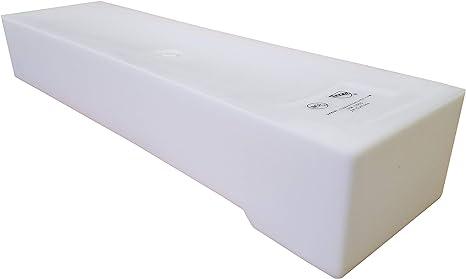
When sizing your water tank for a campervan, several crucial factors come into play. Firstly, assess your anticipated water usage, considering factors
such as whether you'll have a shower and how frequently it will be used. Secondly, evaluate how often you'll have access to refill your tank, especially if you plan extended periods off the grid. Budget is another significant consideration, as larger tanks tend to be more expensive. Additionally, take into account the available space within your van for mounting the tank without encroaching on living areas. Weight is also a crucial factor, particularly if your van is nearing its weight limit. Calculating your expected water consumption, including drinking, dishwashing, laundry, and personal hygiene, is essential for determining the appropriate tank size. Living in a van requires water conservation, emphasizing the importance of mindful usage to avoid wastage and ensure sustainability on the road.
✔ As this water will be directly consumed, it's imperative that your fresh water setup prioritizes ease of cleaning, refilling, and utilizes food-safe materials.
✔ Permanent tanks offer distinct advantages, particularly for full-time van dwellers, thanks to their larger capacities.
✔ With ample storage, you can minimize the frequency of refills, reducing the hassle of sourcing water on the go.
Task
Usage
Drinking & cooking
21L
Washing up
7L
Showering/washing
15L
Washing clothes
2L
TOTAL
45L
Section 14
Pressurizing Your Water System
How do you get water from your tank to move through your system?
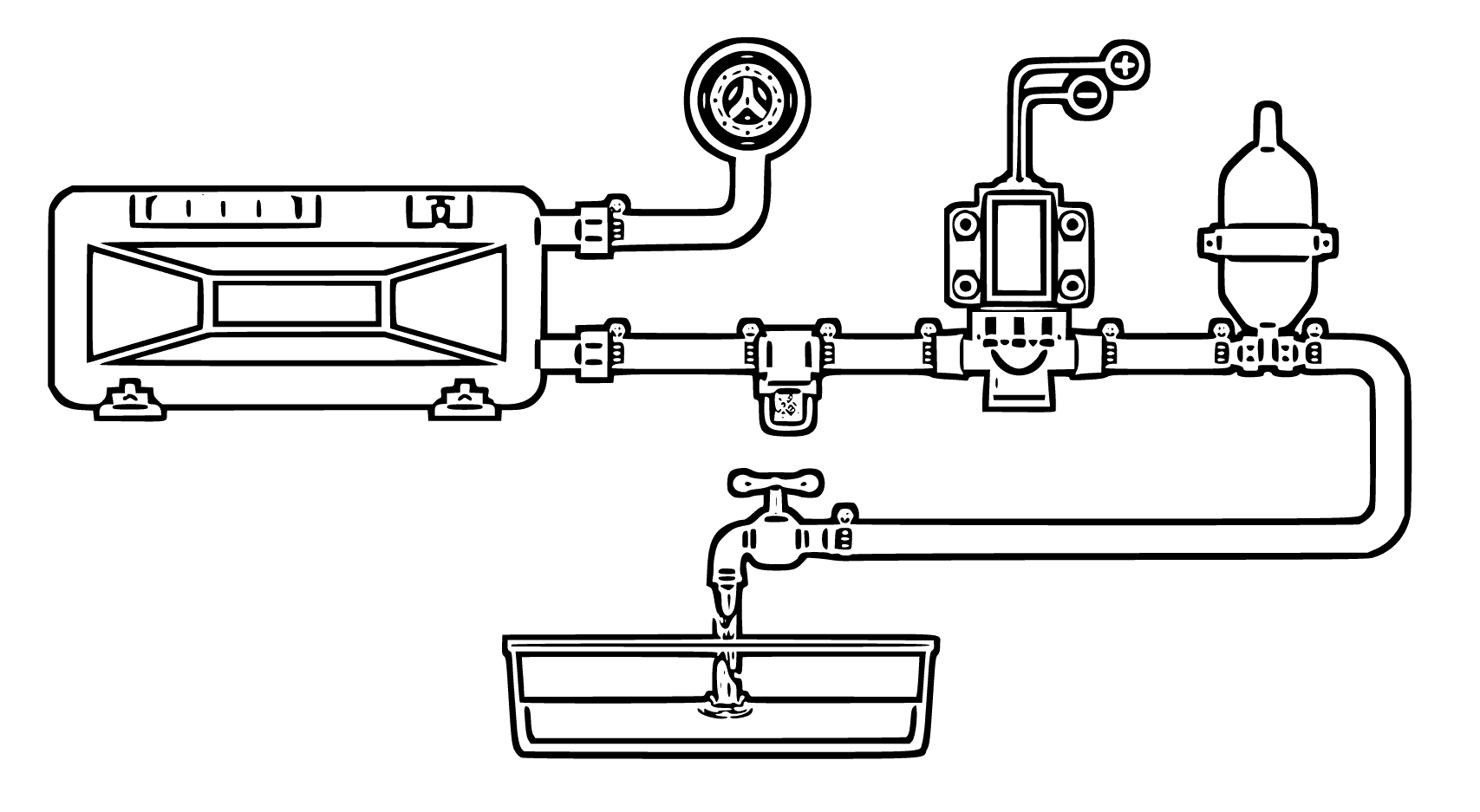
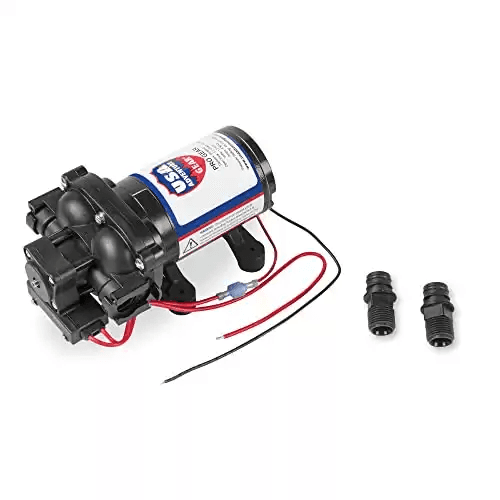
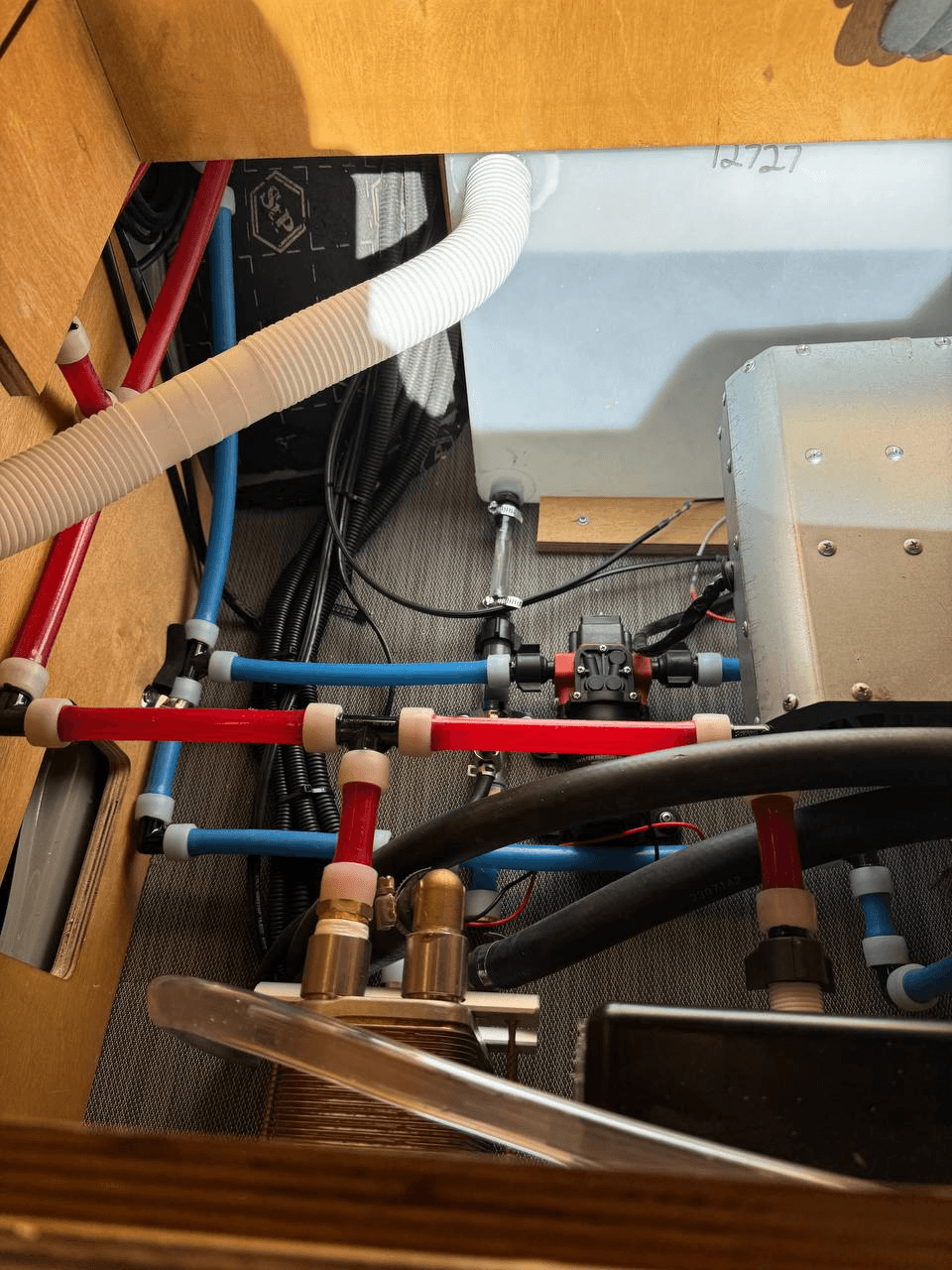
You simply use a 12V water pump to pressurize your whole system. We always recommend putting this water pump on an on/off switch and leaving your system un-pressurized when you are not using it. Optionally (but recommended), you can use an inline accumulator to smooth out the inconsistencies in pressure.
An inconsistent pressure means your water pump kicks on at one PSI and off at another, which makes your water flow uneven (think of a sine wave). An accumulator smooths out this flow. Water is generally used sparingly in a van, so there is no need for a high-volume pump. 3 gallons per minute is plenty for nearly all conversion vans out there.
Section 18
Choosing the Right Sink and Faucet for Your Campervan
What is the perfect sink and faucet for your custom camper?
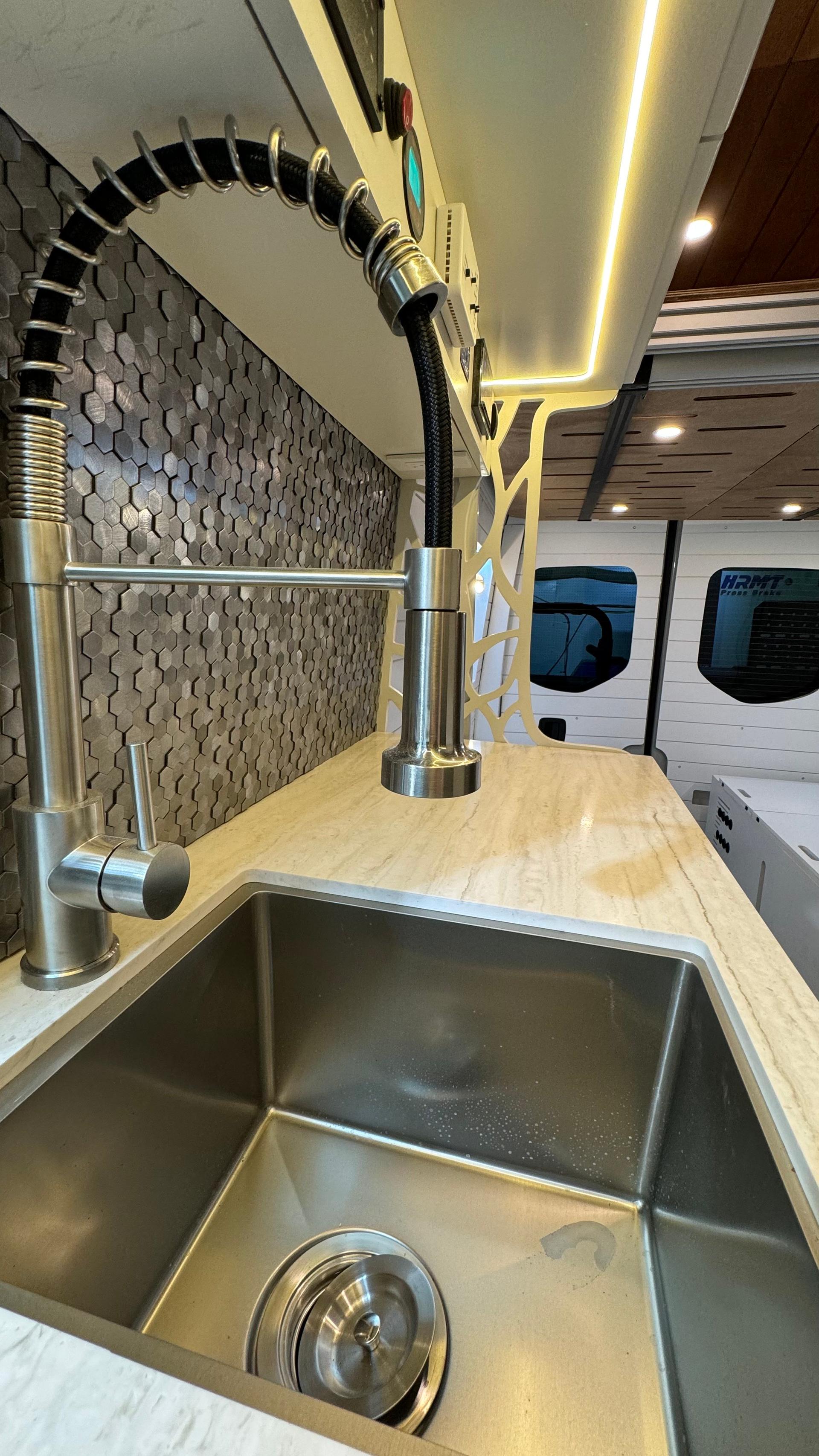
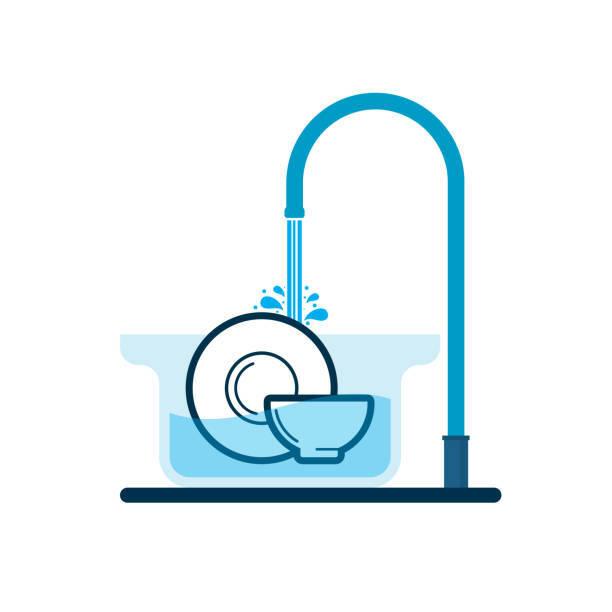
When outfitting your campervan, choosing the right sink and faucet setup is essential for maximizing functionality and efficiency. Opting for a larger sink with a workspace design can provide ample room for dishwashing and food preparation. A bigger sink allows for temporarily storing dirty dishes while on the move. Selecting a water-efficient faucet is equally important, as it can extend the lifespan of your water tank. Look for faucets with a low flow rate and easy flow control, such as those with pull-down sprayers and lever handles, which make dishwashing easier and minimize countertop messes.
In a van with limited space, you'll likely only have room for one faucet. Faucet options are abundant, ranging from complete RV combos to customizable residential options. Regardless of your choice, having a functional setup allows for essential tasks like handwashing, dishwashing, and food preparation inside your van, which is a more convenient and affordable solution for van life.
Section 23
Water Filtration
What is an RV water filter?
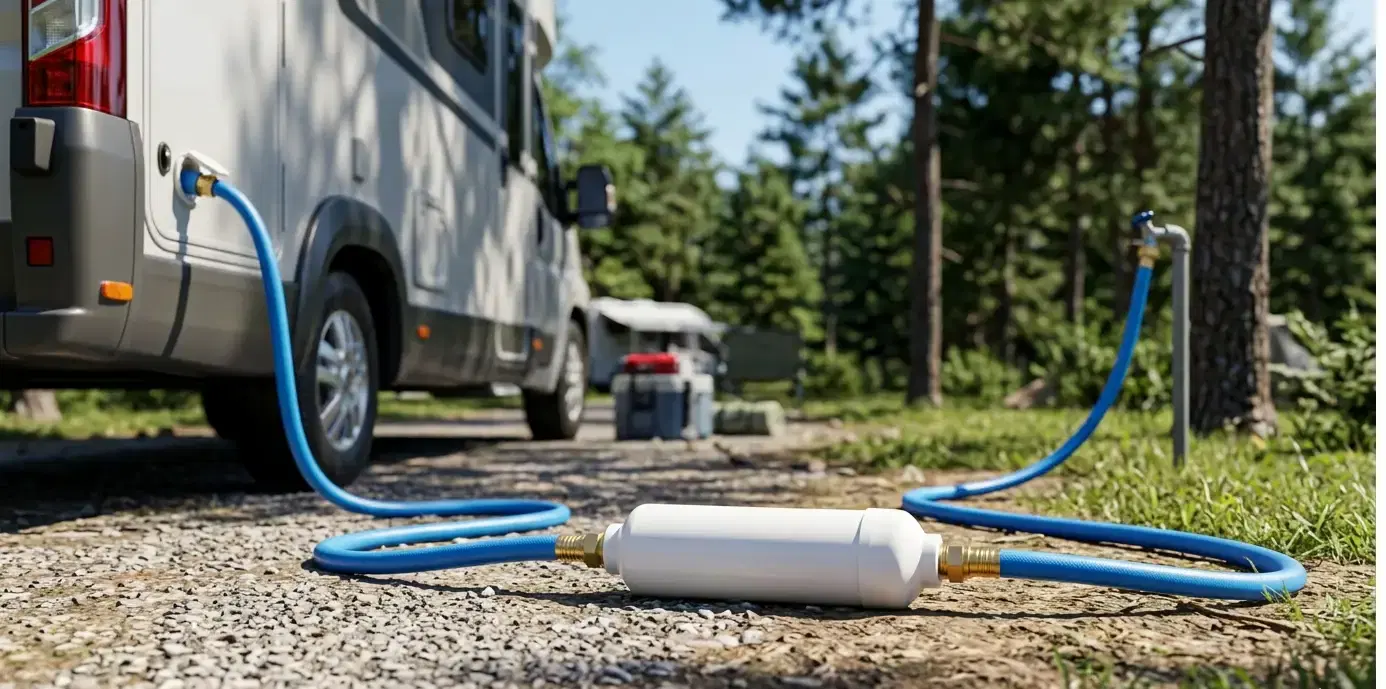
An RV water filter serves as a crucial component in ensuring the cleanliness and safety of the water supply within your camper. These filters can be installed either inside the RV or in-line, directly connecting to the water source. Depending on your needs, some filters can be connected to all plumbing fixtures, while others are dedicated to a single faucet. Filters designed to service the entire vehicle are typically installed in the wet bay alongside the city water connection and water pump, while point-of-use filters are situated near the specific fixture they serve.
Section 27
Campervan Water Heaters
How to heat the water in your Camper?
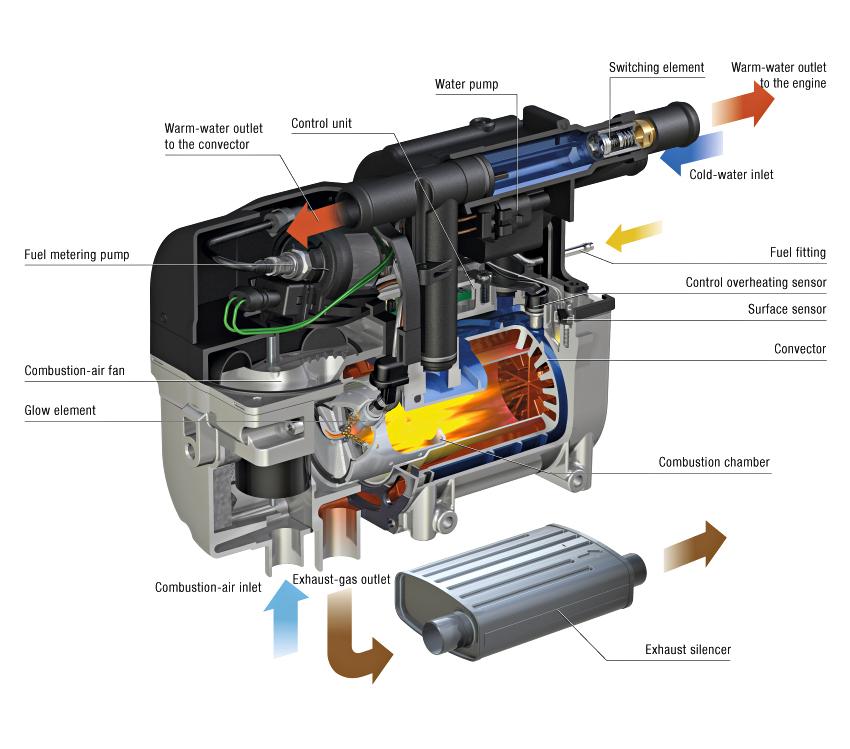
Selecting the appropriate water heater for your campervan depends largely on your specific requirements and preferences. If you plan to have a fully enclosed indoor shower or wish to shower outdoors, especially during colder months, a water heater becomes essential. Combi heaters offer a versatile solution, as they not only heat water but also warm the air, functioning similarly to household combi boilers.
These heaters operate by drawing cold water from your tank and heating it through a heat exchange process. Opting for an external installation saves internal space while ensuring safety. Moreover, combi heaters eliminate the need for gas fittings in your campervan and can even be used while driving, offering convenience and flexibility for on-the-go living.
Section 32
Grey Water Systems
What size grey water tank do you need for your van?
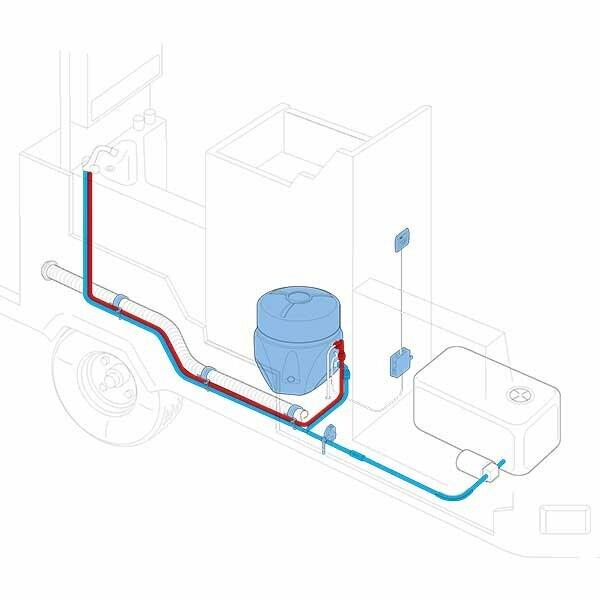
Choosing the right gray water tank for your motorhome is essential for a comfortable travel experience. Unlike fresh water tanks, gray water tanks collect used water from sinks and showers, so they don't need to be as spacious. A size of 20-23 gallons is often sufficient for a few days of typical usage without carrying unnecessary weight.
Since gray water tanks should be emptied frequently to prevent odors and excess weight, prioritize accessibility for easy drainage. Consider the availability of disposal sites along your travel route and choose a tank shape that fits well within your van's layout. These considerations will help you select a tank that meets your needs for space, convenience, and functionality.
✔ In a campervan, a greywater system serves the crucial function of collecting used water from various activities such as washing dishes, cooking, tooth brushing, and hand washing, excluding human waste and chemicals.
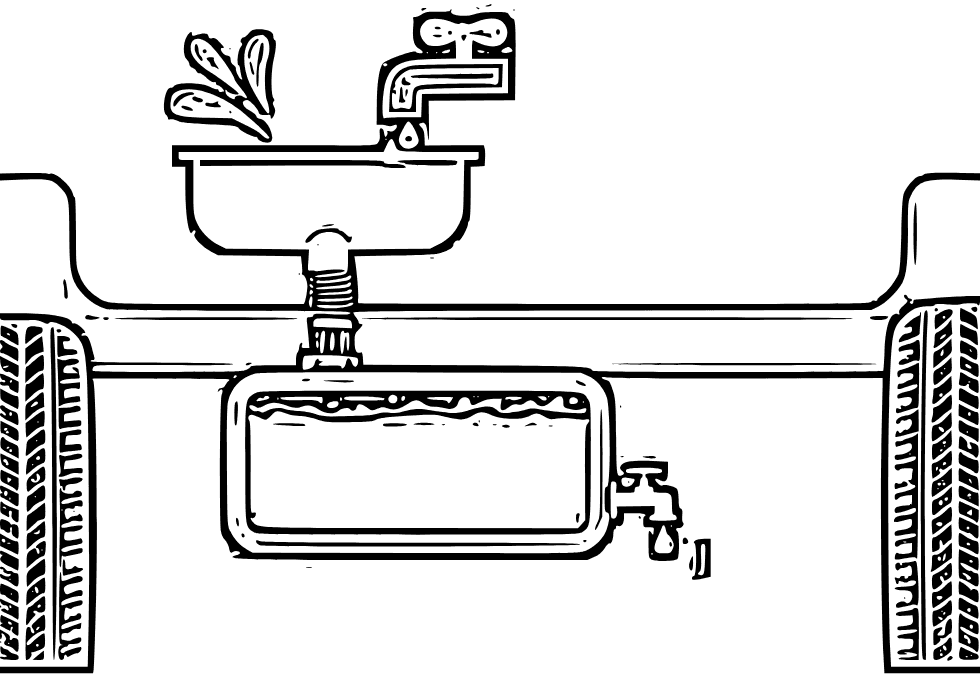
✔ Greywater systems deal exclusively with water contaminated by household activities. Typically, a network of waste pipes is integrated into the campervan's structure, leading to a holding tank mounted underneath.
✔ Regular maintenance is essential to prevent the tank from overflowing, which can lead to sanitation issues and unpleasant smells.
✔ Installing a permanent greywater tank offers convenience, as it eliminates the need for frequent setup upon arrival at campsites.
Section 40
Water Storage & Access
What are the advantages of installing a dedicated gray water tank in a motorhome's system?
Installing a dedicated gray water tank is a favorable option. These tanks come in various sizes, typically 20 to 30 gallons, and can be relatively easy to install. They efficiently collect used water from sinks and indoor showers, providing a more comprehensive solution. While the installation can be more involved, the benefits include extended stays in the wilderness. Additionally, these tanks often fit well beneath the van, attached to the chassis.
Section 44
Maintaining Clean in Your campervan
Do you know what happens if you don’t empty your grey water tank before it’s full?
To prevent gray water from backing up into the kitchen sink or shower tray, it's crucial to regularly empty the tank, especially when it's nearing capacity. Keeping these areas clean and functional requires a few simple steps:
clean food debris from plates and pots before washing them to reduce organic matter entering the system
use sink strainers to capture large particles
and opt for eco
friendly
biodegradable soap to minimize environmental impact. These practices help maintain the functionality of your grey water system and ensure a more pleasant living environment in your motorhome.
Section 48
Responsible Gray Water Disposal in Your Van
So where can you dump your grey water?
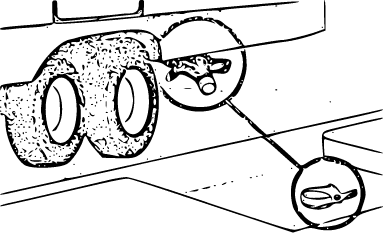
While we discourage the direct drainage of gray water onto the ground from your van, some individuals opt for an alternative solution. They choose to install plumbing that leads from the gray water tank to the exterior of their vehicle, equipped with a release valve for appropriate usage areas. When washing items inside the van, especially if disposing of water outside, it is recommended to use biodegradable soap.
However, a crucial precaution is to avoid dumping water in or near streams, as all soaps, including biodegradable ones, can have adverse effects on aquatic life. Embracing responsible gray water disposal practices ensures a more environmentally-friendly approach to van life, minimizing the impact on natural ecosystems.
Section 52
black Water Systems
What size black water tank do you need for your van?
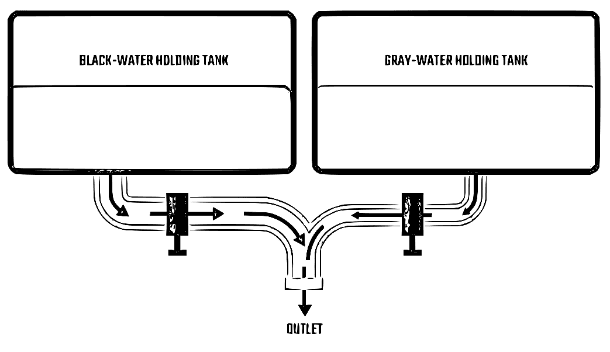
A black water system in a campervan comprises waste pipes and a holding tank dedicated to managing wastewater contaminated with urine and fecal matter, commonly referred to as black water. This system is specifically designed to safely handle waste produced after toilet use. Typically, installation of a black water system is necessary only if you intend to incorporate a toilet system in your campervan that requires a separate storage solution for black water.
Alternatively, certain portable toilet models feature integrated blue and black water systems directly within the toilet unit, providing a convenient and self-contained waste management solution for campervan owners.
✔ Due to the nature of their contents and the chemicals involved, it's essential to empty blackwater tanks at designated RV dump stations.
✔ While camper van toilet options recommended typically do not necessitate blackwater tanks, it's worth noting that if you opt for a toilet system that does require one, these tanks are usually stored beneath the van and require a dedicated port for easier dumping.
✔ Blackwater tanks serve the crucial role of collecting human waste in camper vans, typically requiring the use of chemicals for sanitation purposes.
✔ Although blackwater tanks are rare in van builds, understanding their function and proper disposal procedures is important for maintaining cleanliness and hygiene during your travels.
Section 61
Mindful Black Water Disposal in Your Van
So where can you dump your black water?
Dumping raw sewage, or black water, directly outside is not only highly improper but also illegal in many countries worldwide. Responsible waste disposal is paramount for preserving the environment and adhering to legal regulations. Fortunately, many campsites offer dedicated facilities for emptying black water tanks, providing a convenient and proper solution for disposing of waste from your van. By utilizing these facilities, travelers can ensure they are upholding environmental standards while enjoying their camping experiences responsibly.
Section 65
Water tank sanitization
How to clean a fresh, grey and black water tank?
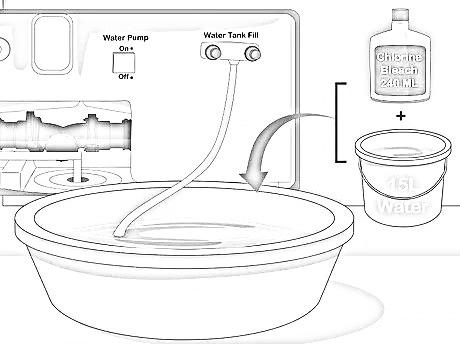
Sanitizing your water and plumbing system every 2-3 months is essential for maintaining cleanliness and preventing bacterial growth. To do this effectively, prepare a chlorine solution by mixing ¼ cup of unscented household bleach with one gallon of water. You'll need one gallon of this solution for every 15 gallons of tank capacity. Avoid pouring pure bleach directly into your water tanks; instead, dilute the solution and pour it into the tank, filling the remaining capacity with water. Turn on the water pump to allow the chlorine solution to circulate through the pipes and sit in the tank for three hours.
Afterward, run the taps to transfer the bleach solution from the fresh water tank to the gray water tank, letting it sit overnight. Finally, flush the system with potable water several times to remove any remaining bleach residue. It's important to note that both gray and black water systems use similar components since they handle wastewater. Regular maintenance and sanitation ensure a clean and functional water and plumbing system in your van
Section 70
IN CONCLUSION
That wraps up our comprehensive guide to campervan water systems. We've covered everything you need to know,
from understanding different types of tanks to maintenance tips and responsible disposal practices. We hope this guide has been informative and helpful in navigating the complexities of campervan water systems. If you found the content valuable and enjoyed your reading experience, we would be grateful for your feedback. Thank you for joining us on this journey!
.jpg&w=1920&q=75)