Talk with our experts in Big Bear, California, about financing, test drives, and personalized upgrades.
Consultation Call
1
Date
2
Time
3
Details
4
Review
Support Line
+1 (951) 441-9719
Welcome Back
Please sign in with Google to manage your bookings.
Let’s Connect
Tell us what’s on your mind!
Big Bear Vans Location
320 W Big Bear Blvd, Big Bear City, CA 92314, USA
B
Big Bear Vans
Fetching Van Details...
Campervan Electrical System | Big Bear Vans
Expert Journal
Campervan Electrical System
October 31, 2025110 Min Read73 Insights
Section 1
How Camper Van Electrical Systems Function?
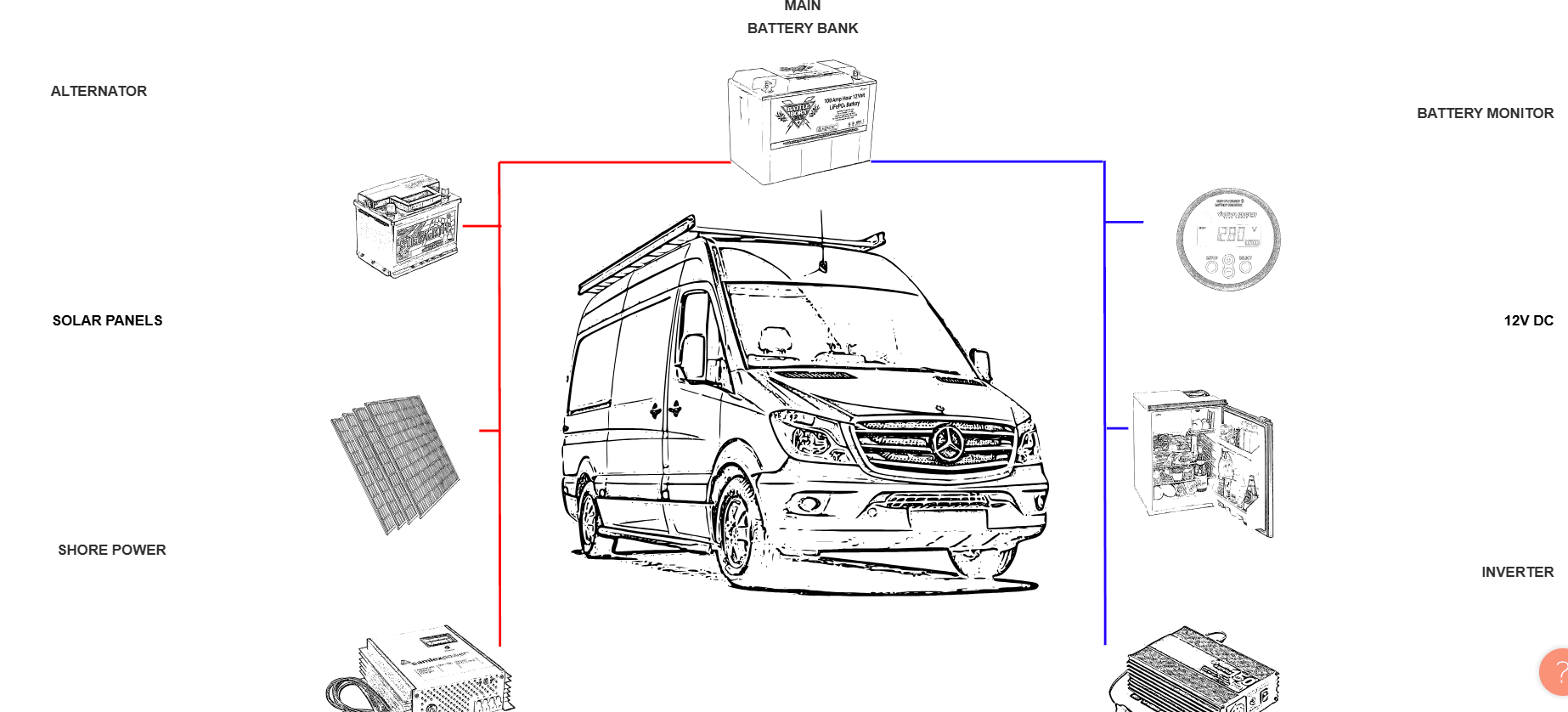
Camper van electrical systems operate on a foundation of three primary components:
the power source
the charging source
and the loads. Each plays a crucial role in ensuring the functionality of the system as a whole. In this breakdown
we delve into the intricacies of these electrical components
shedding light on their individual functions and how they seamlessly integrate to power your camper van's electrical setup. Understanding these essentials is key to effectively managing and optimizing your camper van's electrical system for your on
the
road adventures.
Deep Dive
BASIC ELEMENTS OF A CAMPERVAN ELECTRICAL SYSTEM
Section 5
CHARGE SOURCES (ADD ENERGY)
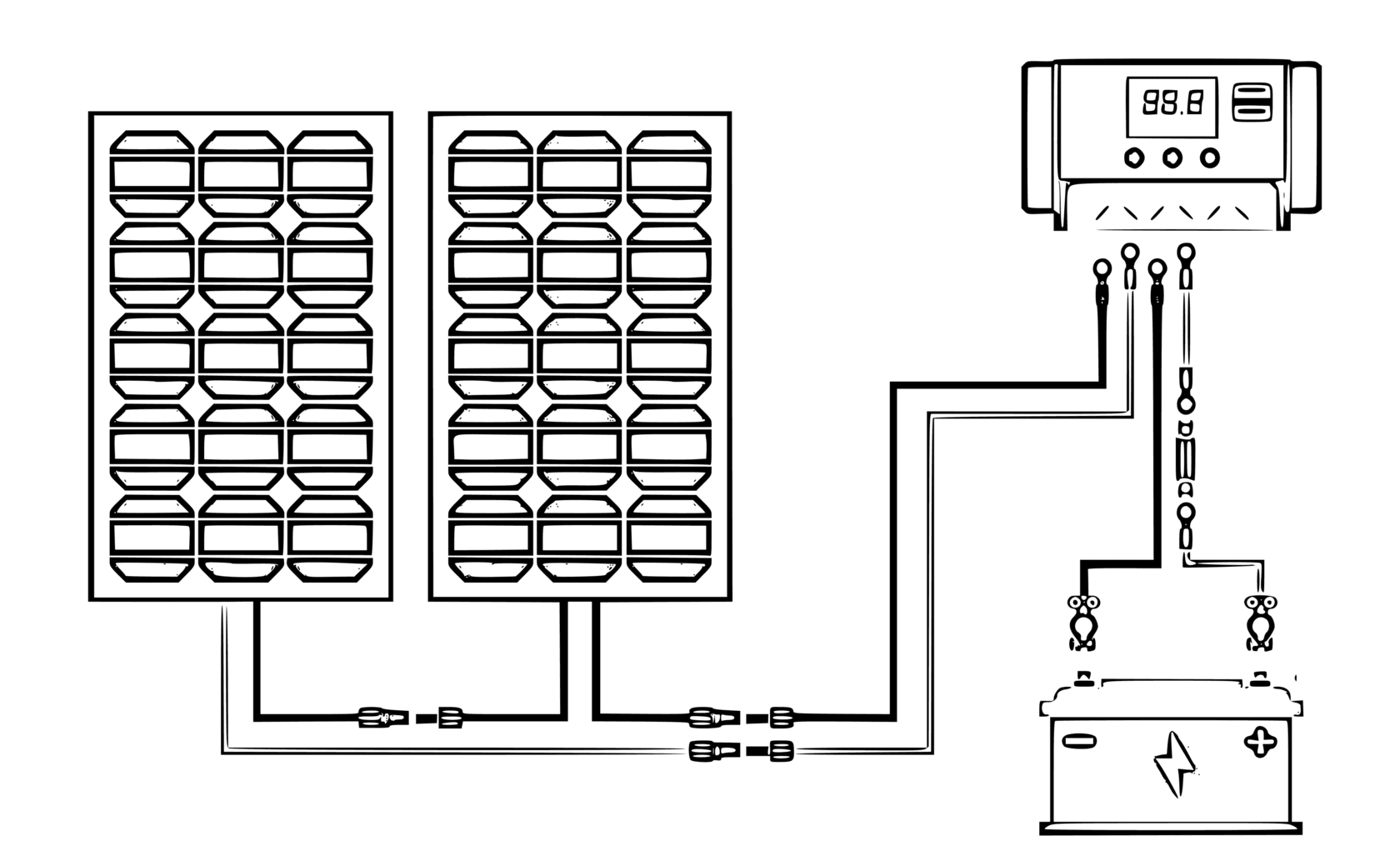
Solar Panels:
These are a popular choice for camper vans as they provide a sustainable and convenient way to charge batteries using sunlight. A solar charge controller is necessary to regulate the charging process.
Alternator Charging:
The alternator in your van converts engine power into electricity
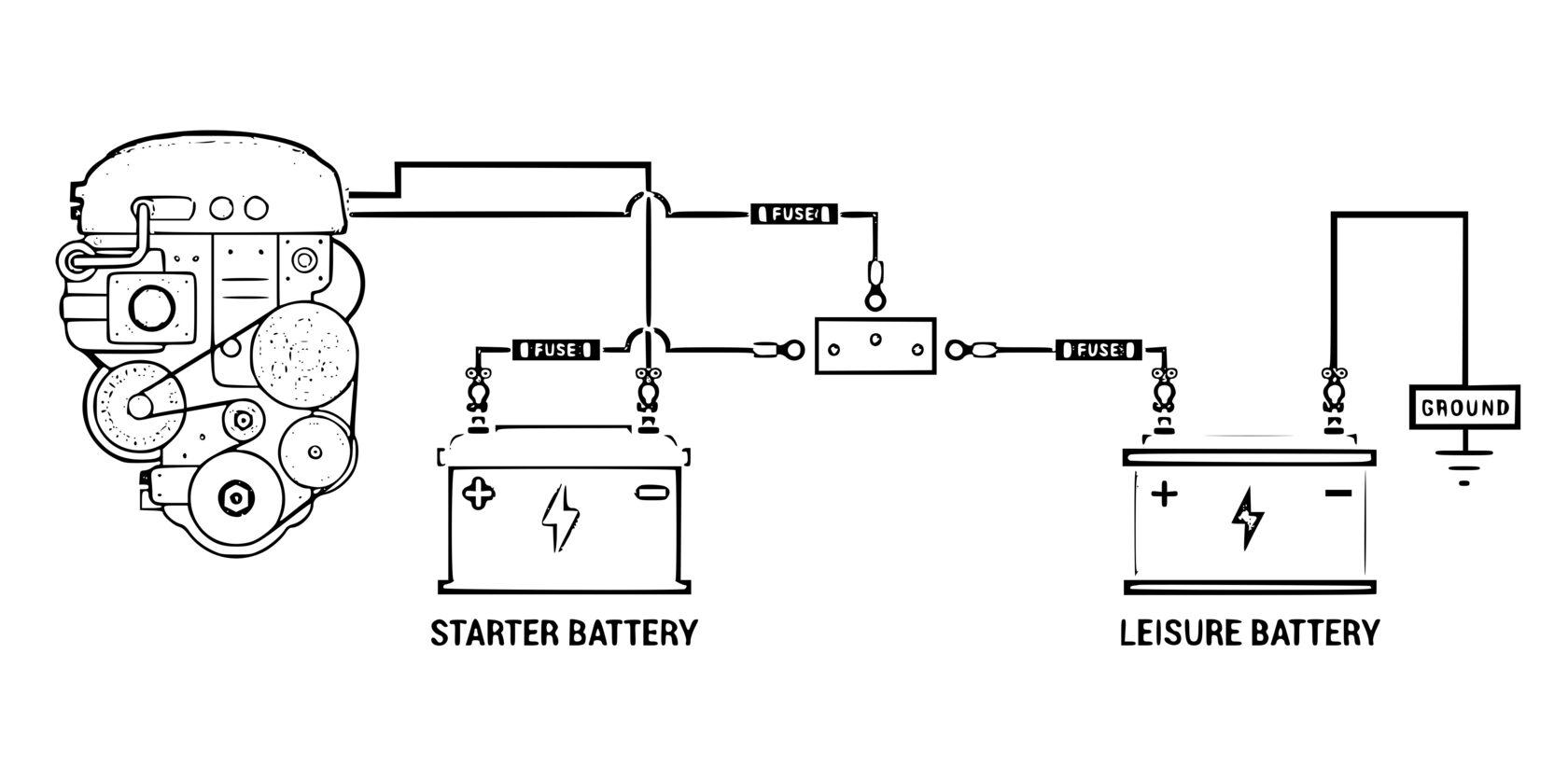
which can be used to charge your batteries. Devices like split charge relays transfer power from the alternator to the auxiliary batteries. This method is effective while driving.
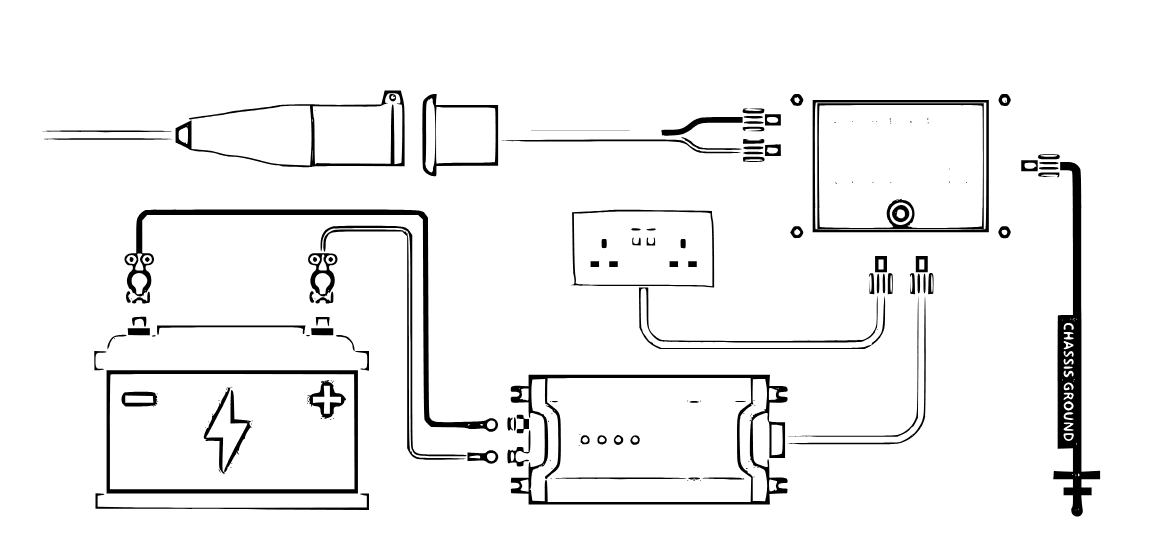
Shore Power:
When you're parked near an electrical outlet
you can use shore power to charge your batteries. An AC to DC battery charger is needed for this
along with an extension cord. This method is useful when you're in a driveway or at an RV park.
Section 9
BATTERY BANK (STORES ENERGY)
Battery Types:
Common battery types for camper vans are lithium
GEL
and AGM batteries (lead
acid)
all considered "deep cycle" batteries. Lithium batteries are often preferred due to their longer lifespan and higher capacity
despite being more expensive.
Battery Capacity:
Camper van owners typically use one to four or more batteries depending on size. Battery capacity is measured in "amp hours
" and having more capacity allows for longer use of electricity before needing a recharge.
12V DC System:
Camper van electrical systems are generally 12
volt DC
which is different from the 110 or 120V AC power in homes. This means appliances in the van
such as lights
fridge
and fan
must be 12V
while devices requiring AC power have limitations.
Section 13
LOADS (USE ENERGY)
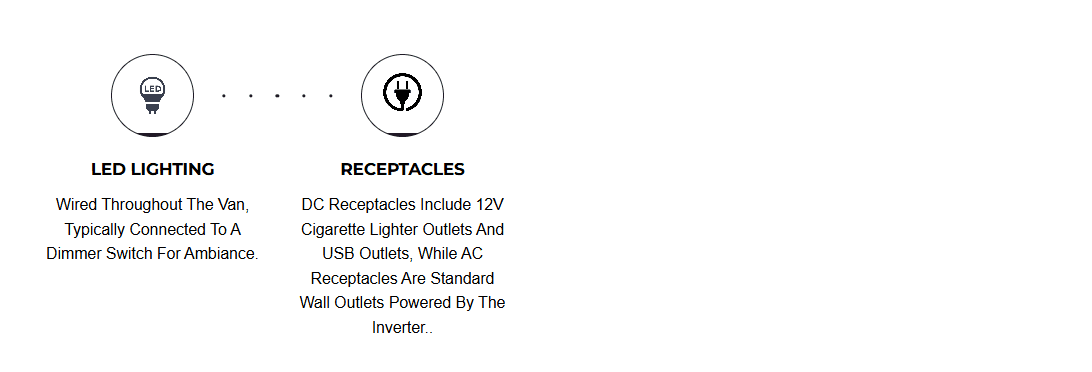
DC Power:
DC power maintains a constant current in one direction with consistent voltage.
Camper van electrical systems typically operate on 12V or 24V DC.
DC power is efficient as it doesn't require conversion before use.
Examples of DC loads include USB plugs
puck lights
water pumps
toilet fans
and fridges.
AC Power:
AC power alternates direction periodically with voltage following a sine wave pattern.
Ideal for larger load applications.
AC power is what you get from outlets in homes.
Examples of AC loads in your camper van may include blenders
induction stove tops
espresso machines
and power tools.
Section 16
BASIC COMPONENTS OF A ELECTRICAL SETUP
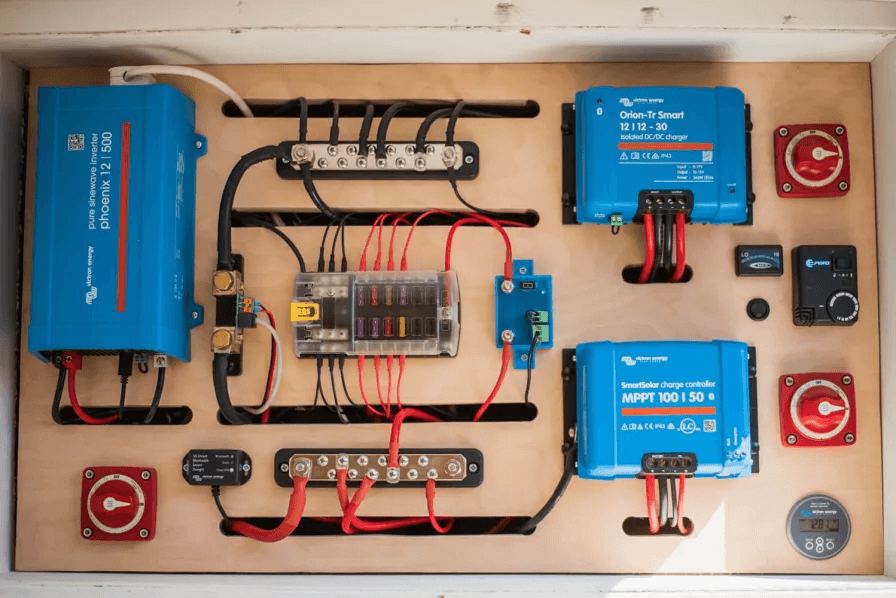
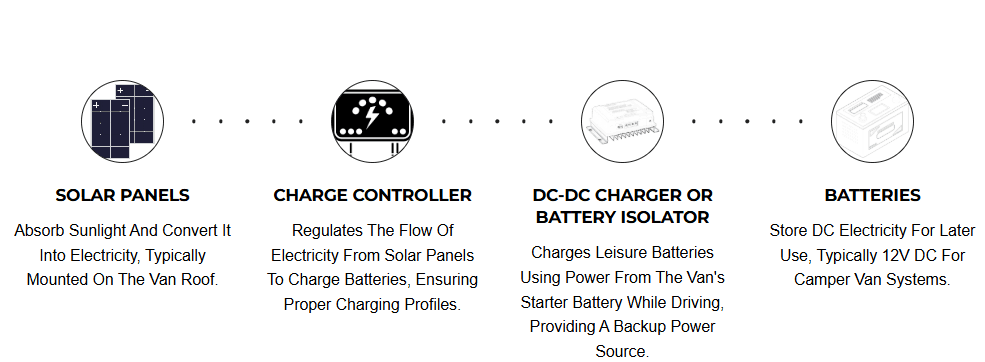
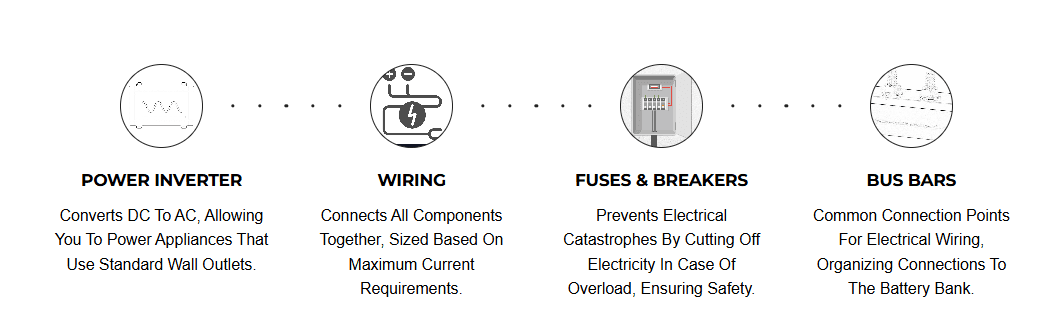
These components work together to create a reliable and efficient electrical system for your camper van, providing power for various appliances and devices while on the road or parked.
Section 21
Designing Your Camper Van Electrical System
When embarking on the design of an off-grid electrical system for your camper van, one of the primary decisions is determining its size.
This crucial step can be approached in two ways:
by calculating your expected power usage and tailoring the system accordingly
or by aligning the system size with your budget and adjusting your power consumption habits to fit. Both approaches offer unique advantages and considerations
requiring a careful balance between functionality
efficiency
and financial feasibility. Ultimately
the chosen approach will shape the overall design and usability of your camper van electrical system
influencing your ability to enjoy off
grid adventures comfortably and sustainably.
Section 28
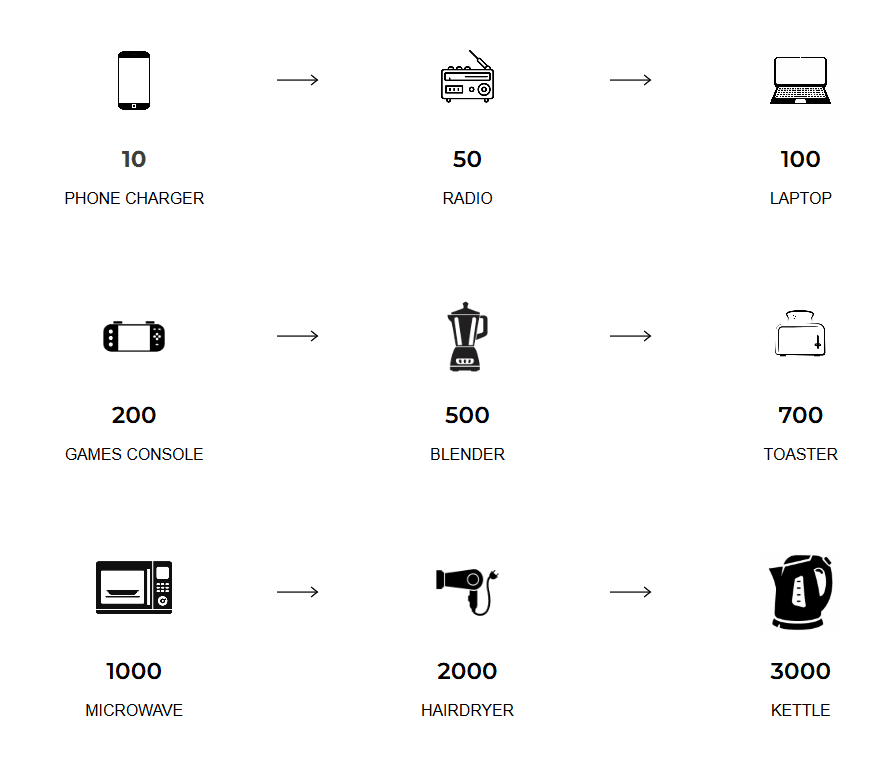
POWER USEGE OF APPLIANCES (watts)
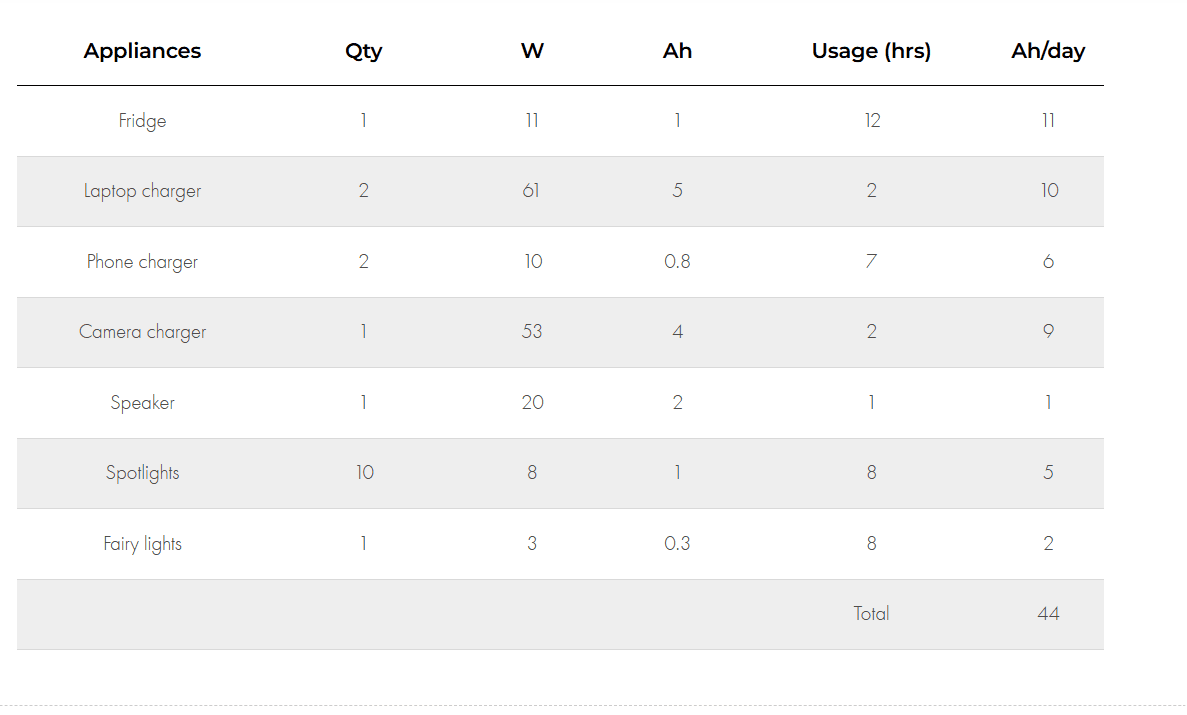
List your appliances and their power requirements in amp-hours (Ah) to determine the battery size needed for your campervan. For accurate figures, consult online sources or product labels.
Section 31
CHOOSING THE RIGHT LEISURE BATTERIES FOR YOUR CAMPERVAN
Campervan leisure batteries play a crucial role in providing reliable power for off-grid adventures
Typically operating at 12V, although occasionally at 24V. To determine the appropriate battery capacity for your needs, it's essential to assess your power usage, measured in amp-hours (Ah). Understanding your daily power consumption, the duration of off-grid stays, and the recharging method for your batteries are key factors in calculating the required battery capacity. By considering these variables, you can make informed decisions about the size of leisure batteries that will best suit your campervan setup, ensuring a seamless and sustainable power supply for your travels.
Section 35
Current (Amps) = Power (Watts) / Voltage (Volts)
Divide the wattage by your system voltage to find each appliance’s current usage.
Section 37
44Ah/day × 3 days = 122Ah of usable capacity
Using our example of 44Ah/day and allowing for three days between a charge, can find our required usable capacity.
Section 39
Current (Amps) × Usage (hrs) = Amp Hours per Day (Ah/day)
Multiply this by the hours you’ll use them each day to find a daily amp hour (Ah) usage for each appliance. Then, total these up to find your total amp hour usage per day.
Section 41
122Ah / 0.8 = 152Ah battery bank (lithium)
Divide your required usable capacity by the amount that you can discharge your specific battery type, to find the battery bank size you need. Dividing our required usable capacity by how much we can discharge the batteries gives us the size of the battery bank we need.
Section 48
Harnessing Solar Power for Van Life
Solar panels stand out as a crucial choice for van conversions aiming for off-grid living.
Leveraging the sun's virtually limitless power, they serve as an excellent solution for charging campervan batteries. However, it's essential to consider the downsides. While solar panels still function on cloudy days, their efficiency significantly decreases. On hazy days, the thin cloud cover may reduce efficiency to around 50%, and during heavy cloud and rain, the panels might generate minimal power. Additionally, the sun's angle on the panels influences their output, resulting in lower power during winter when the sun is lower in the sky compared to summer.
Section 52
Solar panel wattage
The wattage of a solar panel denotes the maximum power it can produce per hour. Combining multiple solar panels involves summing up the wattage of each panel to determine the total solar array in watts.
Section 54
Solar panel current
In the intricate realm of solar panels, understanding the short circuit current (Isc) is paramount. Isc denotes the maximum current a solar panel can deliver, influencing the speed at which your batteries recharge. Recalling physics lessons, the equation P = I V elucidates that power (watts) equals current (amps) multiplied by voltage (volts). Striking a balance between open circuit voltage (Voc) and current is key. While a higher Voc ensures charging even in suboptimal conditions, a sufficient current accelerates the battery recharging process.
Section 56
Solar panel open circuit voltage (Voc)
Voc signifies the maximum voltage a solar panel can generate under optimal sunlight. For instance, if your 12V leisure battery requires a charging voltage around 14V, it's imperative that your solar panels can meet or exceed this threshold. Considering the example of a 100W solar panel with a Voc of 22V, it becomes evident that its efficiency diminishes on cloudy days or during winter, potentially hindering effective battery charging.
Section 58
Solar Panel Charging Duration for Your Campervan Batteries
Understanding the time it takes for solar panels to charge your batteries is paramount. Employing a straightforward formula (Wh/W=h), where "Wh" represents the watt-hours of your batteries, "W" signifies the total wattage of your solar panels, and "h" denotes the charging time, enables you to strategize effectively. By understanding this timeframe, you can plan your energy consumption and ensure a reliable power supply during your adventures. This calculation proves invaluable in maximizing the efficiency of your solar panel setup, ensuring a constant and sufficient energy flow for your campervan's electrical needs.
Section 60
Understanding Electric Hook Up for Camper Vans
Electric hook up, also known as shore power, is a vital feature for camper van enthusiasts, offering access to electricity while on the road or parked at campsites.
This system typically involves a socket mounted on the exterior of the van, allowing it to connect to an electric hook up point available at campgrounds or even to a home power supply. The socket is intricately linked to a consumer unit, akin to a domestic fuse box, which serves as a crucial safety component. This unit is designed to safeguard against potential hazards, such as electric shocks, by promptly detecting and mitigating earth faults within the system. When utilizing electric hook up, campers benefit from a reliable source of power to operate various appliances and devices within their vans. Whether it's charging electronic gadgets, running lighting fixtures, or operating kitchen appliances, electric hook up enhances the comfort and convenience of van life. Additionally, by tapping into shore power, campers can minimize reliance on battery reserves, extending their ability to stay off-grid for longer periods while still enjoying modern amenities.
Section 64
Electric Hook Up for Campervans
Campervan electric hook-up is a vital component for ensuring convenience and safety during travels. This system typically includes a long extension cable, a waterproof socket, and a consumer unit, all essential for distributing power safely within the vehicle. Additionally, the shore power charge system, also known as a hook-up power system, plays a crucial role. It comprises components such as a mains power inlet, a consumer unit or breaker panel, a 110/230-volt battery charger, and connecting wires. Together, these elements form a comprehensive electrical infrastructure that allows campervan owners to recharge batteries and power appliances while parked at campsites or home, ensuring a hassle-free and enjoyable experience on the road.
Section 66
Land-Based Power Sources
Land-based power refers to electricity sourced from a country's national grid, typically operating at either 110 or 230 volts. It offers a reliable option for camper vans when parked at campsites with grid access. Additionally, external generators, powered by diesel or renewable energy like wind or solar, can serve as alternative land-based power sources.
Section 68
The Role of Camper Van Consumer Units
In the realm of camper van electrical systems, the consumer unit plays a vital role in maintaining safety and functionality. This component serves as the nerve center for distributing 230V power, incorporating essential safety features such as residual current devices (RCDs) and miniature circuit breakers (MCBs). Acting akin to resettable fuses, MCBs swiftly interrupt the current flow in response to short circuits, high current, or overload scenarios, providing critical protection for the entire electrical system. Complementing this, RCDs function as switches designed to mitigate the risk of electrocution by detecting imbalances in current, promptly halting the flow when deviations occur. Whether it's powering battery chargers, inverter/chargers, or plug sockets, all incoming and outgoing 230V power in a camper van must pass through the consumer unit, ensuring a secure and regulated electrical environment.
Section 70
Advantages of Shore Power for Campervans
Shore power systems offer campervan owners a reliable and convenient way to charge their onboard power sources. With the ability to simply plug into the national grid, campers enjoy guaranteed power supply regardless of weather conditions. This convenience is unmatched, especially when compared to alternative power sources like solar, which may be subject to environmental factors. Additionally, setting up a shore power system is relatively straightforward, requiring minimal additional components, making it an accessible option for campervan enthusiasts looking for a dependable power solution on the road.
Section 72
IN CONCLUSION
Navigating the intricacies of camper van electrical systems can be overwhelming, with factors like volts, amps, watts, AC/DC power, solar, and batteries coming into play. This guide aims to demystify camper van electrics, offering a comprehensive overview to answer common questions and provide clarity on essential concepts. Whether you're delving into the world of volts and amps or exploring the benefits of solar power, we hope this article proves invaluable in understanding and optimizing your camper van electrical setup.