Talk with our experts in Big Bear, California, about financing, test drives, and personalized upgrades.
Consultation Call
1
Date
2
Time
3
Details
4
Review
Support Line
+1 (951) 441-9719
Welcome Back
Please sign in with Google to manage your bookings.
Let’s Connect
Tell us what’s on your mind!
Big Bear Vans Location
320 W Big Bear Blvd, Big Bear City, CA 92314, USA
B
Big Bear Vans
Fetching Van Details...
Expert Journal
Camper Mattress Size's
October 28, 2025185 Min Read123 Insights
When preparing a camper for a road trip, one of the most essential requirements is the right mattress for the space provided. RV mattress sizes depend on the type of RV or camper one owns, and therefore, different parameters to consider could include size, comfort, and usability. Choosing the correct RV mattress size is crucial to ensure a good night's sleep while travelling, as it must fit the available space and provide the necessary support for rest. Understanding the different RV mattress sizes and how they align with your camper layout will help you make the best decision for comfort and convenience.
Section 2
Why Can't You Find Camper Mattresses like any other Mattress?
Camper mattresses are different from general mattresses because they should be made to fit into the limited and complicated spaces available in campers, motor homes, and trailers. Some camper mattresses are shorter or narrower than normal and may be made to order depending on the camper layout.
Section 4
Common Camper Mattress Sizes
Section 5
Camper Twin
Section 6
Dimension
28” x 75” to 38” x 80”
Section 8
Ideal For:
Individual sleepers, whether they are children or small-built adults. These are common in small Campers, the Camper twin mattresses mean lots of comfort for one but little space.
Section 10
Camper Bunk
Section 11
Dimensions
28” x 72” to 42” x 80”
Section 13
Ideal For
Class C motor homes or any other Recreational Vehicle that has bunk beds. These mattresses are quite suitable for use by children or young adults and are made in sizes that fit specific bunk sizes.
Section 15
Camper Full/Double
Section 16
Dimensions
53” x 75”
Section 18
Ideal For
Individual renters who need extra space or two people who want to be comfortable. They are generally half an inch smaller than standard full mattresses and are usually found in mid-sized Campers.
Section 20
Camper Short Queen
Section 21
Dimensions
60” x 75”
Section 23
Ideal For
Couples who require a small yet roomy sleeping area. Although it's one and a half feet shorter than a regular queen, the Camper short queen mattress is ideal for tighter areas.
Section 25
Camper Queen
Section 26
Dimensions
60” x 80”
Section 28
Ideal For
Couples who feel that they do not need anything apart from a normal queen-size mattress. Present on much larger Campers and allow for additional space without needing to be built in
Section 30
Camper King
Section 31
Dimensions
72” x 80”
Section 33
Ideal For
Those people who are willing to pay extra money for extra space in a sleeping area. It needs substantial accommodation and is fitted in a few types of motorhomes, which are regarded as lavish.
Section 35
Specialty Camper Mattress Sizes
Section 36
Pop-Up Camper
Section 37
Common Sizes
Twin (38” x 75”), Full (54” x 75”) & Queen (60” x 80”)
Section 39
Ideal For
Often for unique layouts in pop-up campers, a custom size is needed.
Section 41
Camper Three-Quarter
Section 42
Dimensions
48” x 75” to 48” x 80”
Section 44
Ideal For
Twin isn’t for everyone, as smaller Campers with less space but more room than twins are needed.
Section 46
Camper Truck
Section 47
Dimensions
35” x 79” to 42” x 80”
Section 49
Ideal For
It's a great option for taller people who need compact, space-saving solutions. It's found in sleeper cabs or even compact campers.
Section 51
Common Camper Mattress Types
Camper mattresses are designed and manufactured to suit confined areas as well as RV utilities, and they are aimed at providing comfortable and durable bedding to RV users. Here are the most common types:
Deep Dive
Memory Foam Mattress
Famous for its flexibility and capacity to mould to the contours of the sleeper, memory foam is ideal for support and pressure relief. Variants containing cooling gels or wrapped in copper act to reduce heat buildup and are thus suitable for tropical climates. These mattresses are appropriate for side sleepers and those who have arthritis. However, they are a bit costly compared to basic foam types.
Deep Dive
Innerspring Camper Mattress
Probably the most common and inexpensive of all types, innerspring mattresses contain metal coils made of steel. Comfortable footwear, having an appearance that is firm and breathable, remains appropriate during the change of the climate. However, for individuals with back issues or those who like the bed to feel a little softer, these mattresses may not conform well enough to the body’s pressure points.
Deep Dive
Latex Camper Mattress
Latex mattresses can be made of natural or synthetic rubber. They are softer, more breathable, hypoallergenic, and highly environmentally friendly. They offer just as much contouring as would be expected while not coming close to the ‘sink’ feeling of memory foam. These mattresses are also relatively long-lasting, although typically, they have a price premium.
Deep Dive
Hybrid Camper Mattress
Hybrid types of mattresses incorporate coils placed together with layers of foam or latex to provide the support of innerspring and the comfort of conventional mattresses. They are durable and perfect for RV owners who are in search of the best sleeping solutions.
Deep Dive
Air Camper Mattress
Air mattresses are light in weight and may be easily moved around, and they are ideal for campers who are looking for temporary beds. However, these aches may not be suitable for regular use since they lack sufficient depth and may be comparatively short-lived.
Deep Dive
How to Measure Your Camper Bed Space
To avoid making mistakes, correct measurements of the camper bed space require featuring so that the chosen mattress fits in perfectly. Here are the steps:
Section 71
Measure Length and Width
To do that, use the measuring tape to find out the size of the platform. Measure from one corner to another corner, and record those measurements.
Section 73
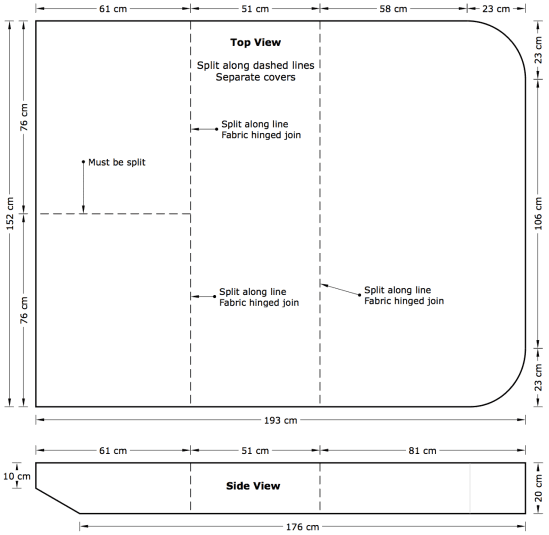
Consider Non-Standard Shapes
Drawings show that a Camper bed has either rounded edges or edges that are gradually thinning in the section. Measure one at the maximum width and the other at the minimum so that they will fit the other.
Section 75
Account for Clearance
Think of the space above and around the mattress, mainly if your RV bed platform contains the bed storage, cabinets, or slides.
Section 77
Test Depth Requirements
Specific beds, such as Murphy beds or pop-up ones, need mattresses that are less thick so that they can easily fold. Check to confirm that the height of the mattress interferes with the usability of its components.
Section 79
Choosing the Right Mattress Based on Your Camper Type
The size and the design of the camper you choose define the kind of mattress you are going to buy.
Here’s a breakdown by camper type:
Section 82
Small Campers and Vans
These usually include beds that are over the top or sleeping accommodations that also act as other pieces of furniture. Ideal for three-quarter mattresses of dimensions 48x75 inches or truck-sized mattresses of dimension of 35-42 inches in width and 79-80 inches in length. Small and perfectly formed, they sleep one adult or two children as comfortably as possible.
Section 84
Medium Campers
In mid-sized RVs, typical sizes are short queen (60 x 75 inches) or RV full (53 x 75 inches). They offer plenty of space for a couple, or of one to two adults, but they don’t dominate the given area.
Section 86
Large Campers
Some of the RVs have many floors and they can be fitted with short king measurements (72 x 75 inches) or RV king size (72 x 80). These options are perfect for families or couples who consider comfort during sleep as their top priority.
Section 88
Truck Campers
Truck mattresses are specially made for small spaces within pickup camper shells and are made to be both small and comfortable.
Section 90
Choosing the Right Mattress
When selecting a mattress for your Camper, consider these key factors:
Section 92
Measure Accurately
Before buying your Camper, always measure its sleeping area. Unfortunately, the factory spec is unlikely to match your requirements, so make your measurements as accurate as possible.
Section 94
Material Matters
Memory foam (lightweight and flexible to unusual shapes), latex (firm and environmentally friendly), and innerspring (traditional support, heavier) are popular choices.
Section 96
Thickness
It is better to go thinner (4–6 inches) in pop-up campers or areas with limited overhead clearance.
Section 98
Tips for Maximizing Comfort
Section 99
Custom Solutions
Many Camper brands need custom-made mattresses with unconventional configurations.
Section 101
Additional Comfort
Provide extra cushioning - especially in thinner or firmer mattresses - mattress toppers to consider.
Section 103
Ventilation
Use proper airflow underneath your mattress, especially if you’re confined to camper bunk mattress sizes.
Section 105
Camper Mattress – What Other Choices Exist?
When traditional mattresses aren’t ideal, several alternatives offer flexibility and cost-effectiveness.
Section 107
Futons
Portable and small, with stacking facilities, futons can be folded and stored throughout the day. These are particularly useful when used in multi-function arrangements in small RVs.
Section 110
Sleeping Pads
Small and easily transported, these are good if you are a basic enthusiast or need a quick fix while out in the wild. They do not offer the thickness of a mattress but are easy to fold.
Section 113
DIY Solutions
Custom-cut foam assures RV owners that they can come up with mattresses that suit different bed sizes. This is especially applicable to irregular platforms as is the case with the following.
Section 116
Inflatable Beds
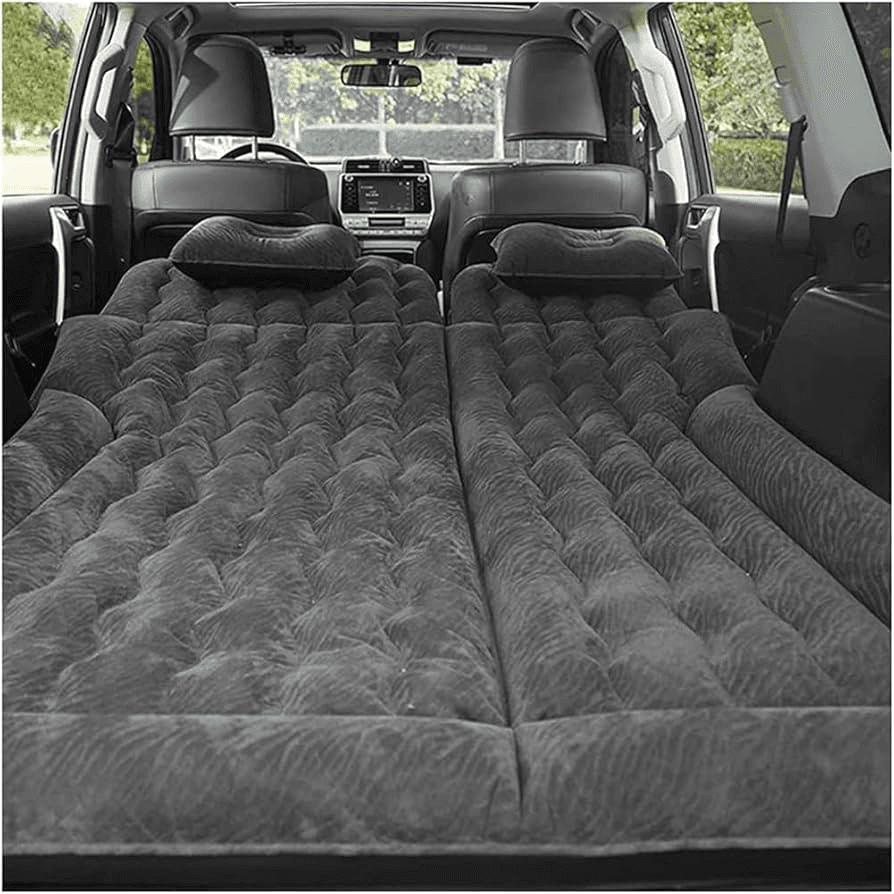
Inflate, use, and deflate is a quick process for air mattresses and hence they are only ideal for short-term use. However, they may not be suitable for long-term use to support framework-heavy applications.
Section 119
Camper Mattress Maintenance and Care
A longer lifespan for a camper mattress can be achieved and these are some of the activities that should be conducted. Here are some tips:
Regular Cleaning
Cleanse the mattress surface by pulling out the dust and dirt as well as allergens using vacuum cleaners. Wipe and wash with mild soap and warm water – do not use press water as it can cause mold to form if any part is dirty.
Promote Ventilation
The mattress should be aired properly by either raising it up or by using a slatted bed base. This makes it harder for water to gather and makes molds unable to grow.
Use a Mattress Protector
Protectors play the actions of preventing spills, sweat, and dust mites from coming into contact with the surfaces of the products. The difference in waterproof options is especially pleasant for users who live in humid and rainy climates.
Store Properly
If it has been a long time since the RV was used, take out the mattress and put it in another cold and dry place. Thus, it should not be populated with heavy things that can cause deformation of the above articles.
Rotate or Flip the Mattress
Daily or weekly turning of the mattress also helps to avoid its excessive wearing out, and sagging in one area when it is used daily and not turned regularly for 3-6 months. Mattresses placed on springs should also be turned over periodically as should double-sided mattresses.
Section 122
Conclusion
A finding is that the perfect mattress size can make all the difference in how you experience your Camper life. Choosing a mattress might feel like an easy task but understanding your requirements and the dimensions of your van can make it a challenging task. Using the information provided above you can make the entire process of choosing an ideal mattress for your camper van seamless. Understanding the Camper mattress size variety and its unique needs will help you turn a Camper into an ideal home away from home.